













James Franco’s The Long Shrift Never Seems to End
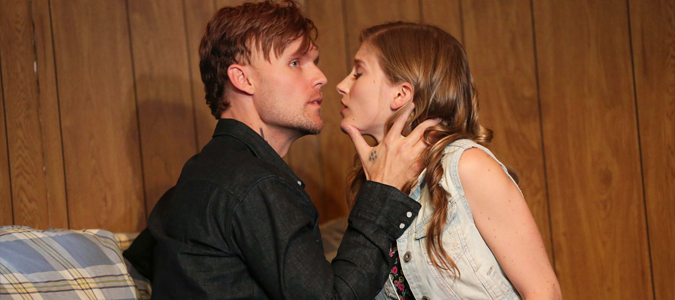
For all the glibness of his image-crafting, James Franco appears to be sincere in his regard for actual artistic production. And I say this not just in hopes of avoiding the title of Little Bitch 2. Uptown, in Steinbeck’s Of Mice and Men (which continues through July 27), he offers a serious and accomplished performance as the itinerant farmhand George; is it his fault if he looks hot doing so? Downtown, as the director of a new play called The Long Shrift, he’s likewise humble, the opposite of showboating. Unfortunately, the opposite of showboating, in this case, is sinking. The play, by Robert Boswell, is halfway capsized to start with, thanks in part to its cargo of lumpy and overweight baggage. I am not referring to the actor Scott Haze, a handsome Franco mini-me (or maxi-me) with a $200 haircut and a gold-plated squint. He plays Richard, a 28-year-old from the wrong side of the tracks whose life was derailed in high school when a classmate, a local Houston princess, accused him of rape. After serving five years in prison, he was sprung when the girl recanted; now, a few years later, he returns to town to appear with her as the entertainment at their tenth high school reunion. That this is phenomenally unlikely does not in itself invalidate it as drama; without the unexpected, where would plays be? But there’s a difference between unexpected and insane, between a playwright’s novelty and desperation. Here, the sudden shift to a quasi-surreal tone has the effect of trashing the quasi-realism that preceded it, along with any investment we may have built up along the way. A play should not be a bum’s rush, with the audience as the bums.