











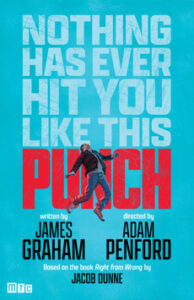




Punch
Opening Night: September 29, 2025
Theater: Samuel J. Friedman Theatre
Website: www.manhattantheatreclub.com
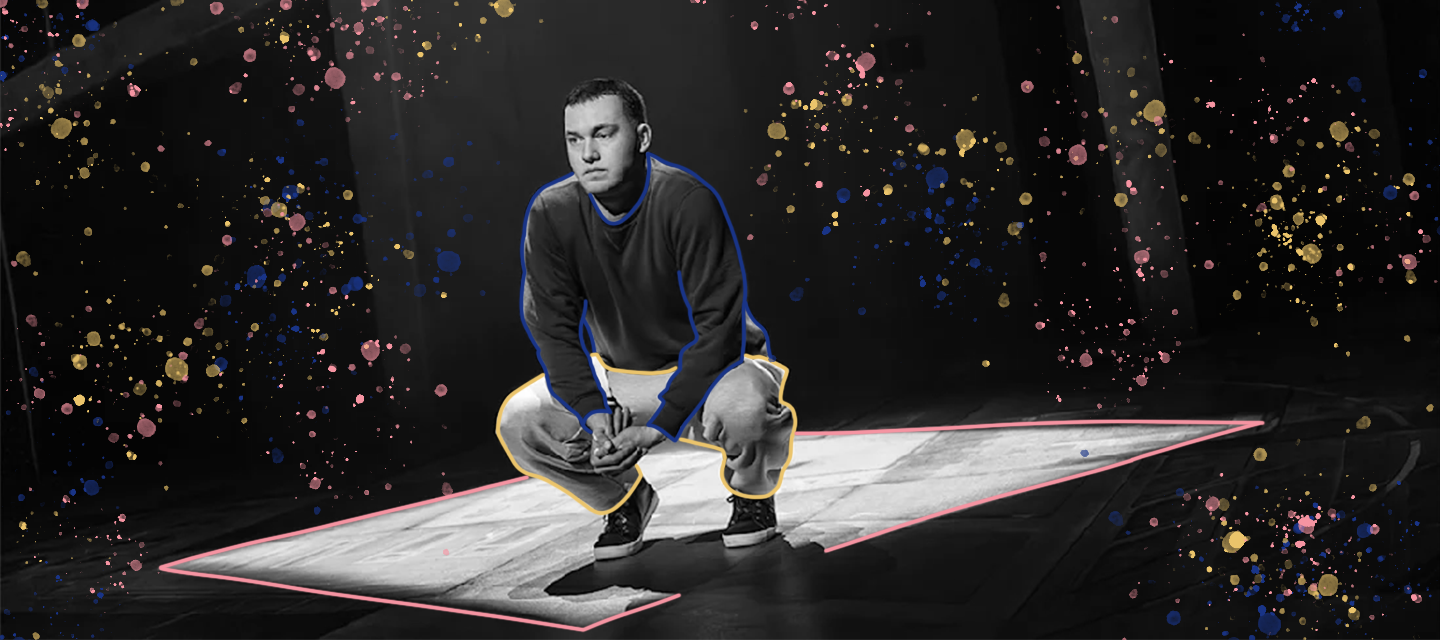
As Jacob tears through Nottingham in a whirlwind of drugs, girls, and bar fights, he makes a fatal mistake that lands him in prison. But as he struggles to accept the consequences of his actions and build a new life, he finds an unusual source of salvation: the parents of the boy he killed. Based on a remarkable true story, Punch is two-time Olivier winner James Graham (INK)’s “most moving work yet” (The Times of London).
BUY TICKETSREAD THE REVIEWS:
September 29, 2025
“Punch” comes up short in capturing the exchange between the victim’s family and the perpetrator because it always leans on Jacob’s perspective, down to an ending that shows him happily moving on in his life as if James’s death had been a positive in terms of his personal life’s arc. But are we meant to think that meeting Jacob was enough to give Joan and David closure?
READ THE REVIEW
September 29, 2025
James Graham’s play Punch, as directed by Adam Penford, is a very, very British work: it’s sturdily acted, choreo-directed within an inch of its life and shot through with a sense of community only a country with a hearty pub culture and universal healthcare could achieve. It is also, despite the production’s evident desire to land with the force of its title, a surprisingly tender and unpretentious story at odds with its battering ram approach.
READ THE REVIEW
September 29, 2025
It leads to a luminous climax, arguably the most beautifully written single scene of the year. Jacob, Joan, David, and moderator Nicola (Camila Canó-Flaviá) sit in a simple half-circle, on hard plastic chairs, and speak plainly about their feelings. The moment is so complicated, fraught, and courageous, performed with simplicity and precision, and written with a frankly unheard-of level of grace.
READ THE REVIEW
September 29, 2025
It’s quite a story, though not necessarily the kind that makes for the most astonishing theater. That’s not to denigrate Punch, which is solidly built and well-meaning without sanctimony. Graham, Penford, and company have done just about all they can to build an engaging stage event, and if the play can’t avoid feeling a bit like an embodied pamphlet for restorative justice, then at least we’re all gathering to hear about something that this world inarguably needs.
READ THE REVIEW
September 29, 2025
Despite the inherent drama and sadness of the entire situation, Punch too often feels like a PSA for the restorative justice procedure, with lots of exposition and step-by-step procedural instructions that, frankly, don’t really need so much explanation. We’ve all seen similar storylines before, whether on TV crime procedurals or docu-dramas. The outcome will come as no surprise, even less so given that the real-life Jacob, with the full support of James’ parents, has made it his mission to spread the word about the consequences of violence and the ramifications of what, in the UK, is known as “one punch.”
READ THE REVIEW
September 29, 2025
To criticize a play that tells this story of transformation is to be a grump. But good intentions aren’t enough to make a good play. The suspense leading up to the first meeting between the parents and Jacob is palpable, and in those early moments, it’s clear that there’s a lot of pent-up emotions ready to erupt at the mere choice of a wrong word, much less a whole question or pointed accusation… The resolution here is much too easy and pat. Maybe that’s the way it transpired in real life, but the stage is another world.
READ THE REVIEWSeptember 29, 2025
Bold and deeply human, Punch is initially a bit slow on the wind up, but its stellar cast help weave together an almost unbelievable story of compassion and empathy in its second act that left many theatergoers sniffling in their seats.
READ THE REVIEW
September 29, 2025
But while story itself is inspiring, some central emotional focus seems missing from the way it unfolds in Punch, which winds up feeling less like a full-blown play and more like a digressive PSA about the dangers of street fighting and the value of restorative justice. Harrison’s performance aside, the play’s blows are hit and miss: connecting here, grazing there but not quite landing a proper hit.
READ THE REVIEWSeptember 29, 2025
James Graham’s Punch, just brought to New York from England’s Nottingham (approx. 127 miles northwest of London) and London’s fringe, plunges more deeply into emotional areas—almost Biblically—than just about any drama on current or recent display. In two acts the drama all but guarantees that by its conclusion there won’t be, as the expression goes, a dry eye in the house.
READ THE REVIEWFrank
Scheck
September 29, 2025
The acting in these scenes is truly extraordinary, with Harrison, previously electric in his high-wire intensity, conveying his character’s inner torment with the subtlest of inflections and mannerisms. It’s a tremendous performance that’s coming very early in the season but deserves to be remembered at awards time. As do those of Clark and Robards, who make the parents’ anguish wrenchingly palpable.
READ THE REVIEWSeptember 29, 2025
The memorable encounter between Jacob and the parents, Joan (Victoria Clark) and David (Sam Robards) comes in the final half hour of “Punch,” a play by James Graham based on Jacob Dunne’s 2022 memoir “Right from Wrong,” and it turns the true story into compelling drama. I wish I could feel as strongly about the two hours leading up to that moment.
READ THE REVIEWSeptember 29, 2025
The progressively morphing reaction of the excellent Robards’ bereaved, wound-tight dad, sometimes a million miles away from a kid he wishes had never been born and sometimes not far away at all, is deeply moving. I could have watched those painful scenes all night.
READ THE REVIEWSeptember 29, 2025
Not without doubts but addicted to adrenaline, Jacob lives in a disorganized, frenetic headspace, illustrated by an animated ensemble (movement direction is by Leanne Pinder). The effect is dizzying, yet Adam Penford’s direction welds Jacob’s fractured existence into a seamless flow.
READ THE REVIEW
September 29, 2025
Flawed and also powerful, Punch tells an astonishing story, and is a chastening corrective in this era of terrible human behavior. It doesn’t just ask how we should behave, but how we could behave. The real tragedy is that its display of decency—its proposal that, as part of the human contract, we forgive, understand, heal, and repair—is so rare.
READ THE REVIEW