













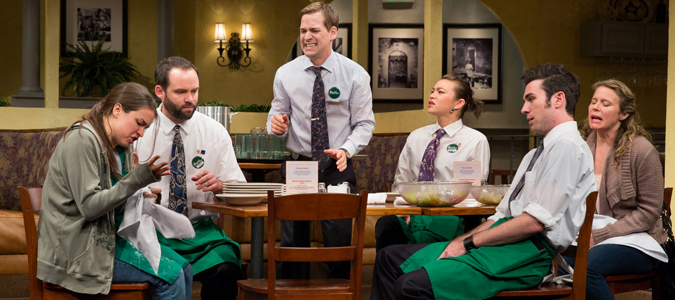

T.R. Knight grapples with small-town solitude in a place that no longer feels like home in this new play from recent MacArthur “Genius” Grant recipient Samuel D. Hunter
Samuel D. Hunter, who this year was awarded a MacArthur fellowship, one of the country’s most prestigious and lucrative arts grants, writes with uncommon empathy about characters struggling with spiritual and emotional isolation in the Idaho settings where he grew up. Despite his plays’ regional specificity, theatergoers from across America, and indeed much of the world, will recognize the escalating loss of identity triggered as mom-and-pop businesses make way for franchises and soulless strip malls. T.R. Knight gives raw, wrenching life to a man in the melancholy grip of that malaise in Pocatello, but this is a minor entry from the rising-star playwright. It’s tough to dramatize abject stasis, and while Hunter skillfully built emotional urgency and narrative momentum into more distinctive plays like A Bright New Boise and The Whale, this new work remains muted and numbingly downbeat despite its concluding note of hope. Even if it’s a disappointment, however, there’s much to appreciate in the writer’s honest observations and compassionate human insights, as well as in the sensitive production of his regular collaborator, director Davis McCallum. Knight plays Eddie, the local manager of an Italian chain restaurant in the eponymous Idaho town. The family-dining franchise is never named, but as designed with pinpoint-accurate, bland hominess by Lauren Helpern, the faux-Tuscan decor will suggest Olive Garden even to people who’ve never been closer to one than the TV commercials. It’s indicative of the depths of the town’s depression that this affordable soup-salad-and-breadsticks emporium can’t hack it in the stagnant economy. But despite getting a firm closing date from corporate, Eddie has not informed his staff they’re about to be unemployed. He’s still hoping in vain that business will pick up enough to reverse the decision.