













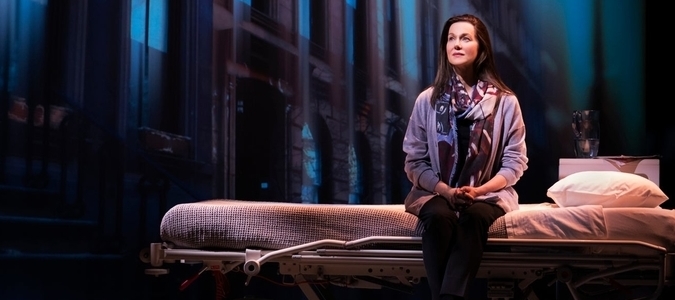

My Name Is Lucy Barton
Linney comes most alive when she’s inhabiting Lucy’s mother, pushing her voice into a nasal Midwestern bark and delivering juicy storytelling monologues. It’s when she is narrating the story as Lucy that the play runs into trouble. Writing and reading are solitary events; public performance is not, and the literary qualities of the text, though often lovely, prove an obstacle: The very fine Linney works hard to suggest an interior struggle behind the smooth, polished reticence of the words—at several points, she verges on tears—yet it is hard to shake the sense that Lucy is writing for us, not speaking to us.