












Into the Newest Into the Woods
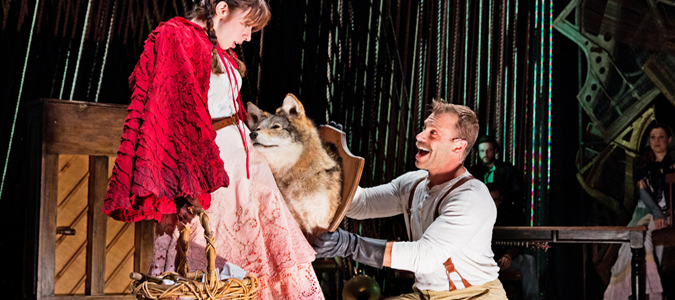
By the standards of the Golden Age, when musicals with a cast of 60 and an orchestra of 40 were common, Into the Woods is not a huge show. Its 1987 Broadway premiere featured just 19 actors in 23 roles, with 15 musicians in the pit. The second collaboration of Stephen Sondheim and James Lapine (the first was Sunday in the Park With George) is nevertheless huge in most other respects. Lapine’s fairy-tale-mash-up book covers a ton of plot, some of it so dense that even after dozens of viewings in as many versions I’m not sure I’ve got it all. (Especially the beans.) Then there’s Sondheim’s score, which for convenience is generally listed as some two dozen numbers, but is really a nearly continuous stream of more than 70 cues, many including avalanches of the cleverest, trickiest words ever corralled into song. And the ideas are big, too, ranging freely among considerations of fate and free will; responsibility to self and society; weak goodness and strong evil; perspective and relativism; good parenting and being a good child. In short, Into the Woods not only features a giant but is one. You would not think anything less than the most generous payroll, the most seasoned performers, and the most elaborate staging — talking birds! transforming witches! — could support such an enterprise. But you would be wrong. Into the Woods is built like a Victorian curio, with gears of solid gold. I have seen it work beautifully with adolescents in high schools (the cast supplemented to include dozens of fairy-tale figures not actually in the script) and on Broadway with stars and on film with Meryl Streep. And now, with the Fiasco Theater’s production at the Roundabout, first staged in 2013 at the McCarter Theatre, I have seen it work in perhaps the most surprising reconfiguration yet: a radical downsizing. Ten actors (most of them double- and triple-cast) cover all of the roles, occasionally playing an instrument as well; otherwise a single pianist (Matt Castle) accompanies the whole thing. There are no stars, there is no pit, and there are no special effects that would not be available even to kids playing in the attic.