













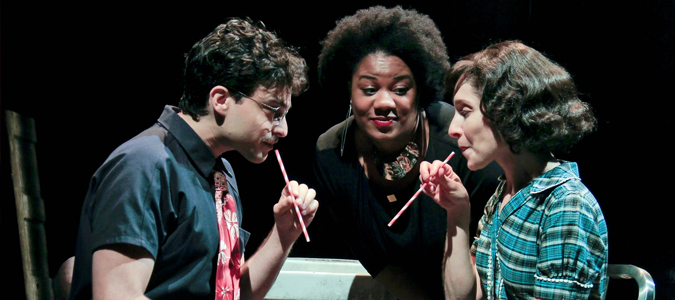

Ethel Sings, The Unsung Song of Ethel Rosenberg
It’s usually not the best sign when the director’s note is more enlightening about a subject than the actual play it accompanies. Such is the case with Joan Beber’s Ethel Sings, The Unsung Song of Ethel Rosenberg, which is making its off-Broadway premiere at Theatre Row’s Beckett Theatre after running last summer at Walkerspace. Redundancies in the singsong title aside, the story of Ethel Rosenberg, the only woman to be executed for espionage during the Cold War (at, erm, Sing Sing prison), is an endlessly fascinating one. It also has major implications about our national identity that reverberate to this day. How exactly did the United States government come to execute two people who were convicted of a nonviolent crime, thereby orphaning two young children? The event takes place in a prison where foreboding electrical equipment towers over the stage and inmates in blue prison jumpsuits shuffle across a dirty checkered floor. A tall-backed electric chair sits behind a scrim upstage center, a constant reminder of where we’re headed (scenic design by John McDermott). The 10-person ensemble reenacts the story of Ethel Greenglass (Tracy Michailidis): her early interest in opera, how she joined the Young Communist League, and how she met her husband, Julius Rosenberg (Ari Butler). Julius is a committed Communist, worried about the plight of the Jewish people in Europe and convinced that the salvation of the world will come from Moscow. The play goes on to show how Julius and Ethel were arrested, tried, and sentenced to death for passing nuclear secrets to the Soviet Union.